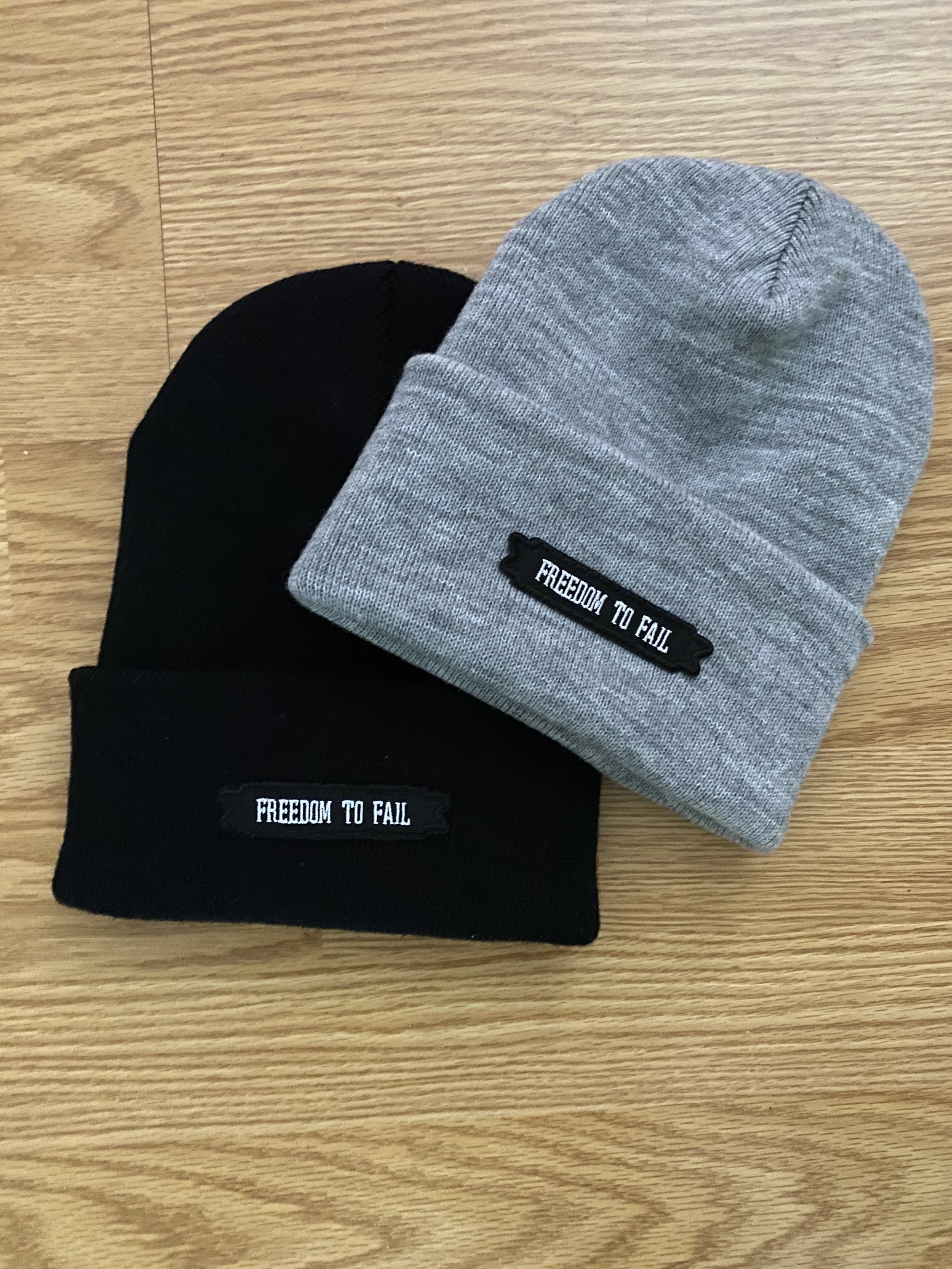
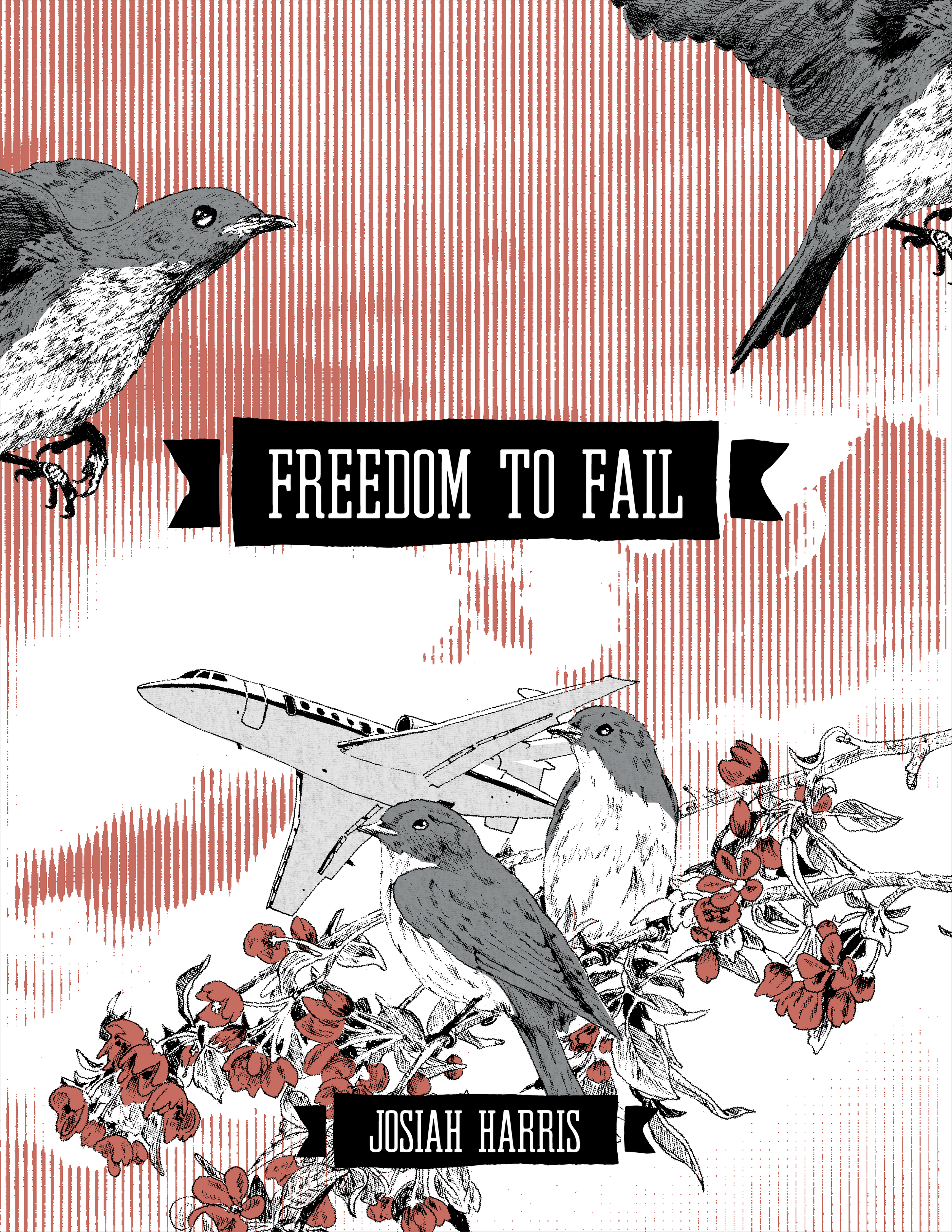
Freedom to Fail
Brand Identity | Visual System | Content Strategy
A brand identity built around creative courage, forward motion, and the freedom to try.
The Brief
Every creative has a list. Projects they want to build, ideas they want to explore, businesses they want to start. For most, that list grows and the starting never happens, not because the talent isn't there, but because the fear of failing before you even begin is louder than everything else.
Freedom to Fail is the brand I built around a simple reframe: failure isn't losing, it's learning. Starting something and falling short puts you further ahead than never starting at all. And most people never start.
I built this brand for myself as much as anyone else. I deal with depression, anxiety, perfectionism, and executive dysfunction. All of those things have a way of making the gap between idea and action feel impossible to cross. But the message isn't about struggle. It's about what's on the other side of it. Everyone has a story worth telling, a mission worth pursuing, something valuable to give. Fear robs the world of that value every day, and this brand exists to push back against that.
The idea is simple: give yourself permission to try, expect the mistakes, and keep going anyway. Take flight. Crash gracefully. Enjoy the journey.
Strategy + Direction
The brand needed to do something specific: hold the weight of real struggle without becoming heavy. It had to feel honest without feeling hopeless, and it had to speak to creatives who wrestle with fear, perfectionism, and mental and emotional barriers without alienating anyone who doesn't come from that experience.
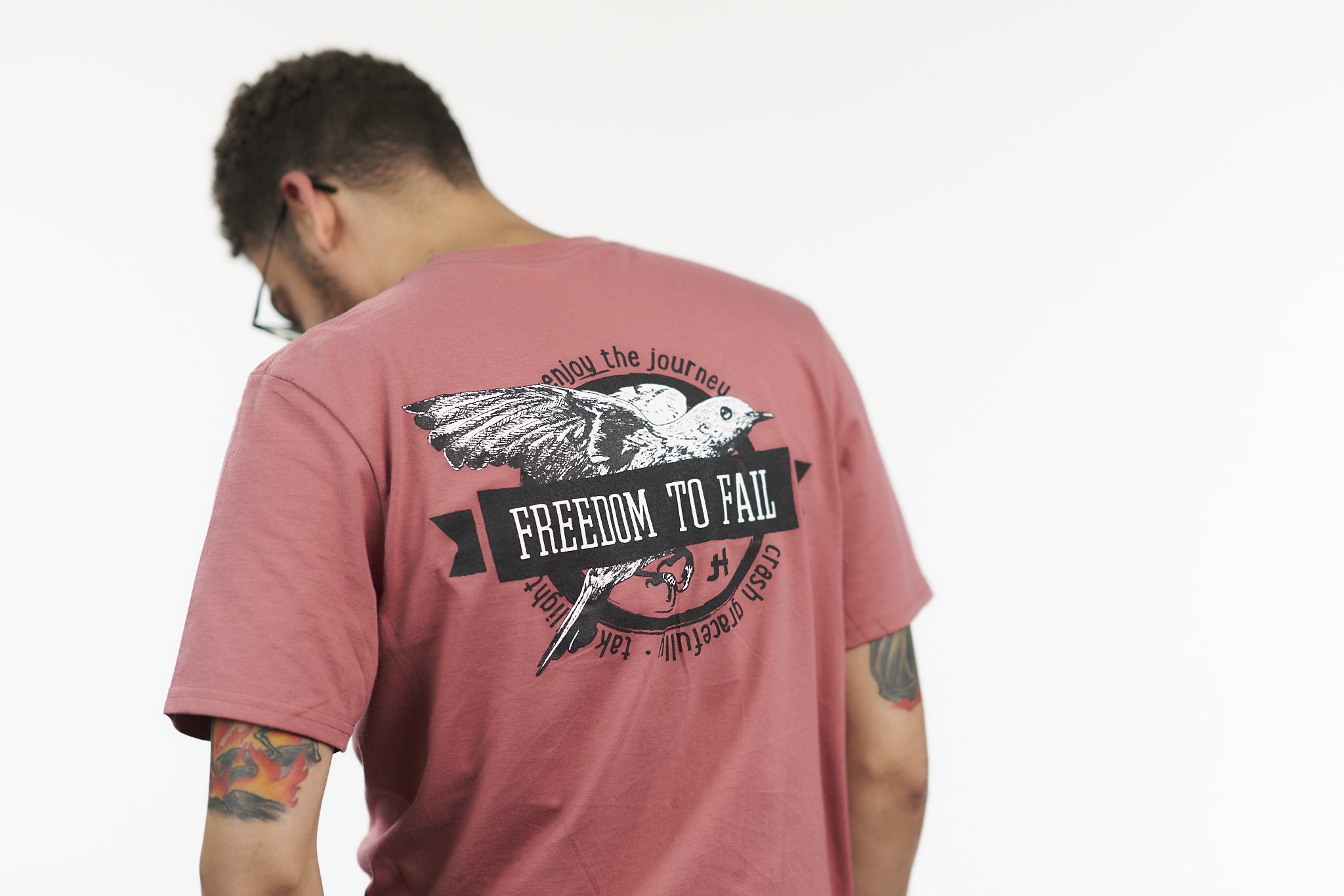
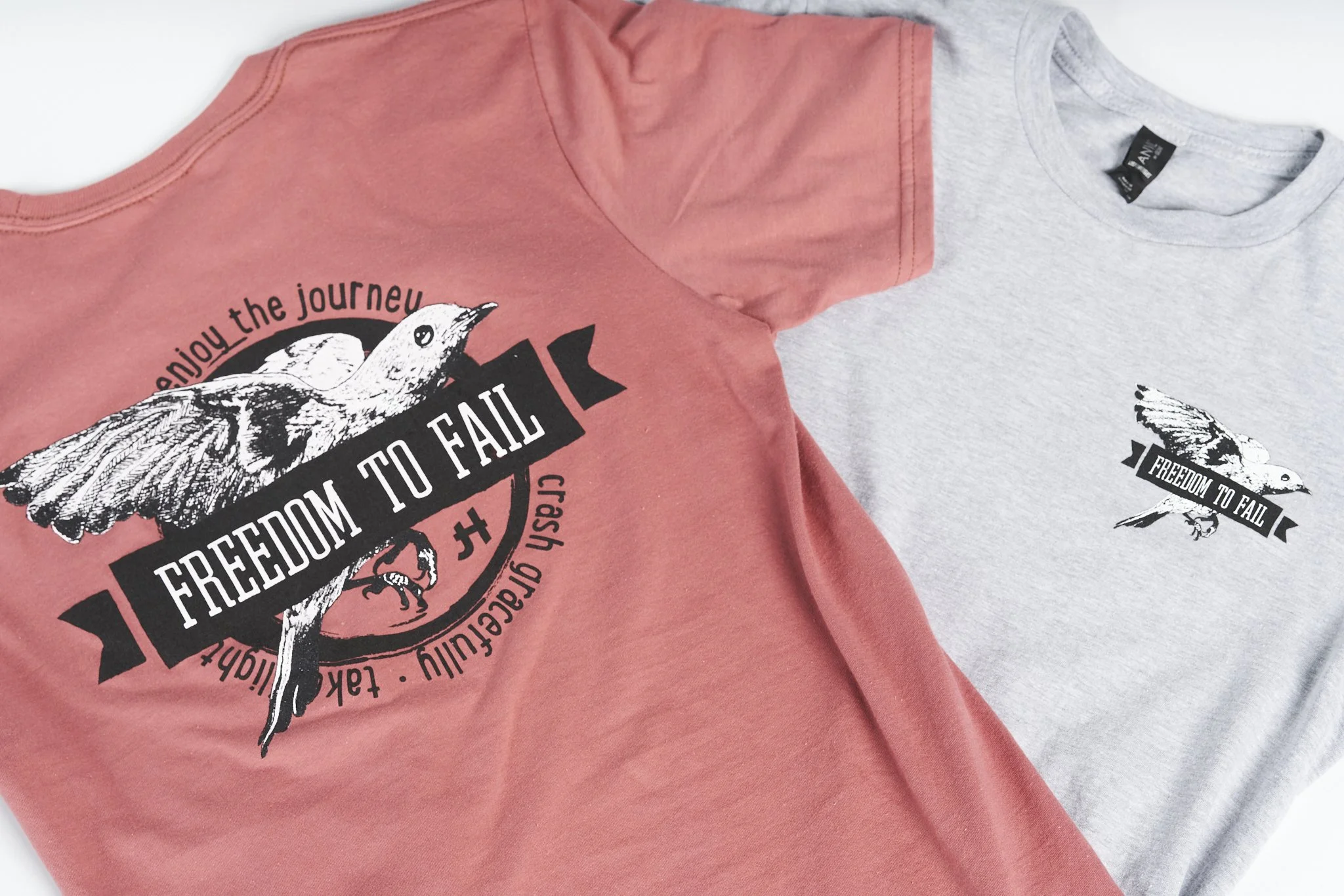
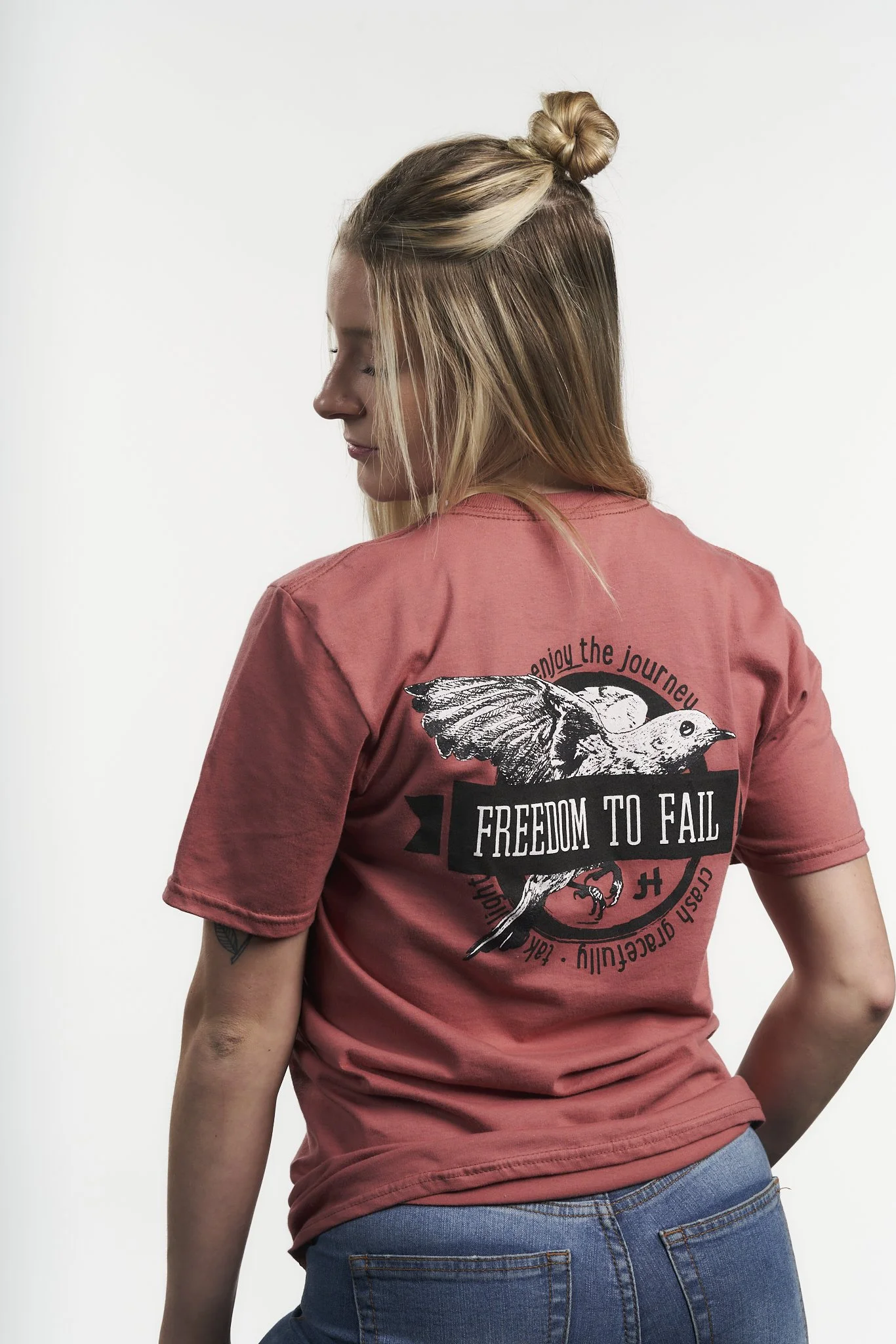
Three phrases printed on the back of every shirt became the strategic foundation for the entire visual system.
Take flight. Start before you feel ready. The act of beginning is the win, and it changes everything that follows. Most people are waiting for the right moment, the right skill level, the right conditions. This phrase says there's no better time than now, even imperfectly.
Crash gracefully. Be easy on yourself when you try and fall short. Failure doesn't reset your progress, it actually lands you a level above where you were before you tried. Every attempt builds something, even the ones that don't work out the way you planned.
Enjoy the journey. The process of creation, even when it's hard, can be something you move through with intention and presence. Challenges and difficulties don't have to be stressful. When your mindset shifts, the same obstacles become part of the story rather than the end of it.
These weren't just taglines to put on a shirt. They were the brief. Every design decision ran through them.
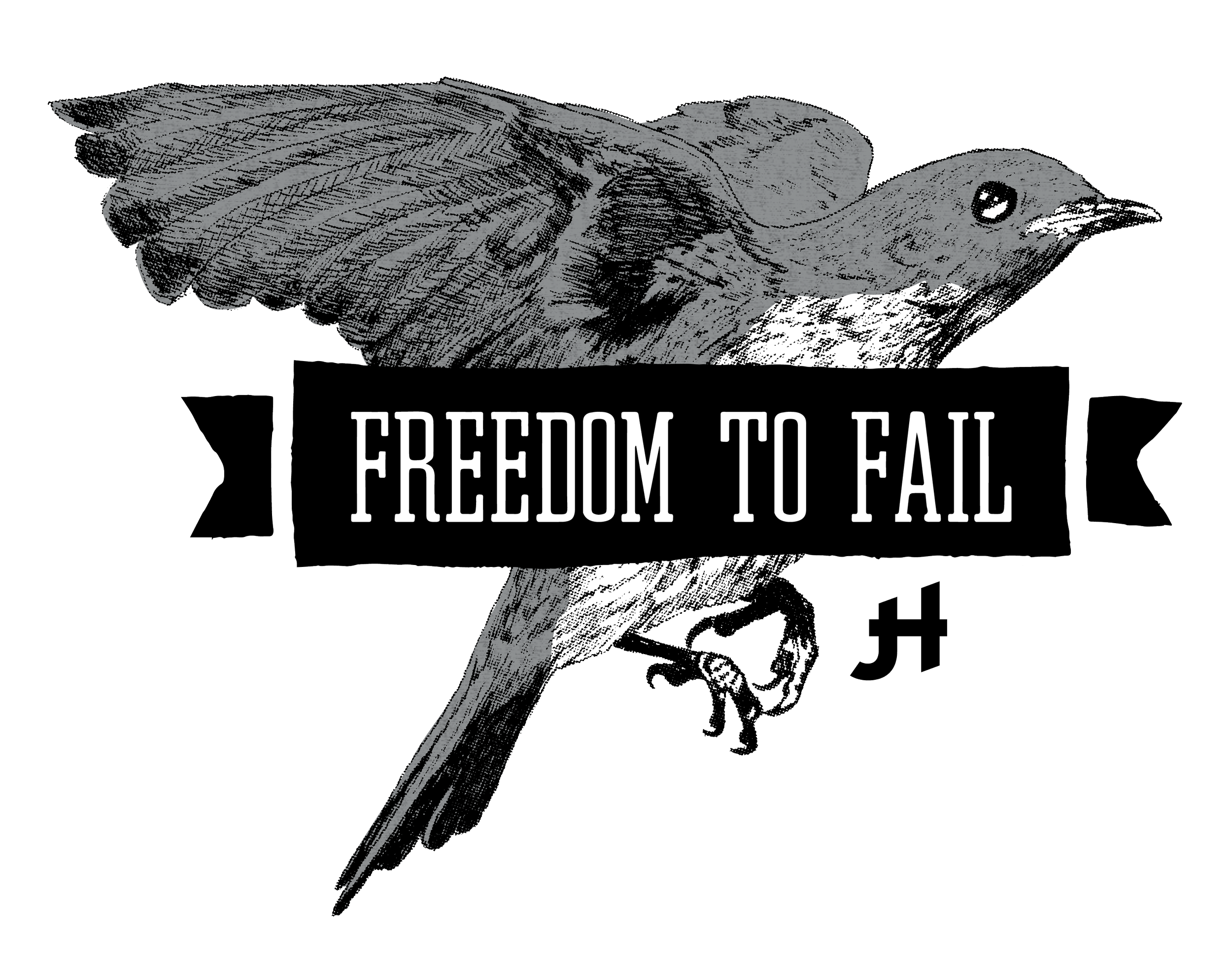
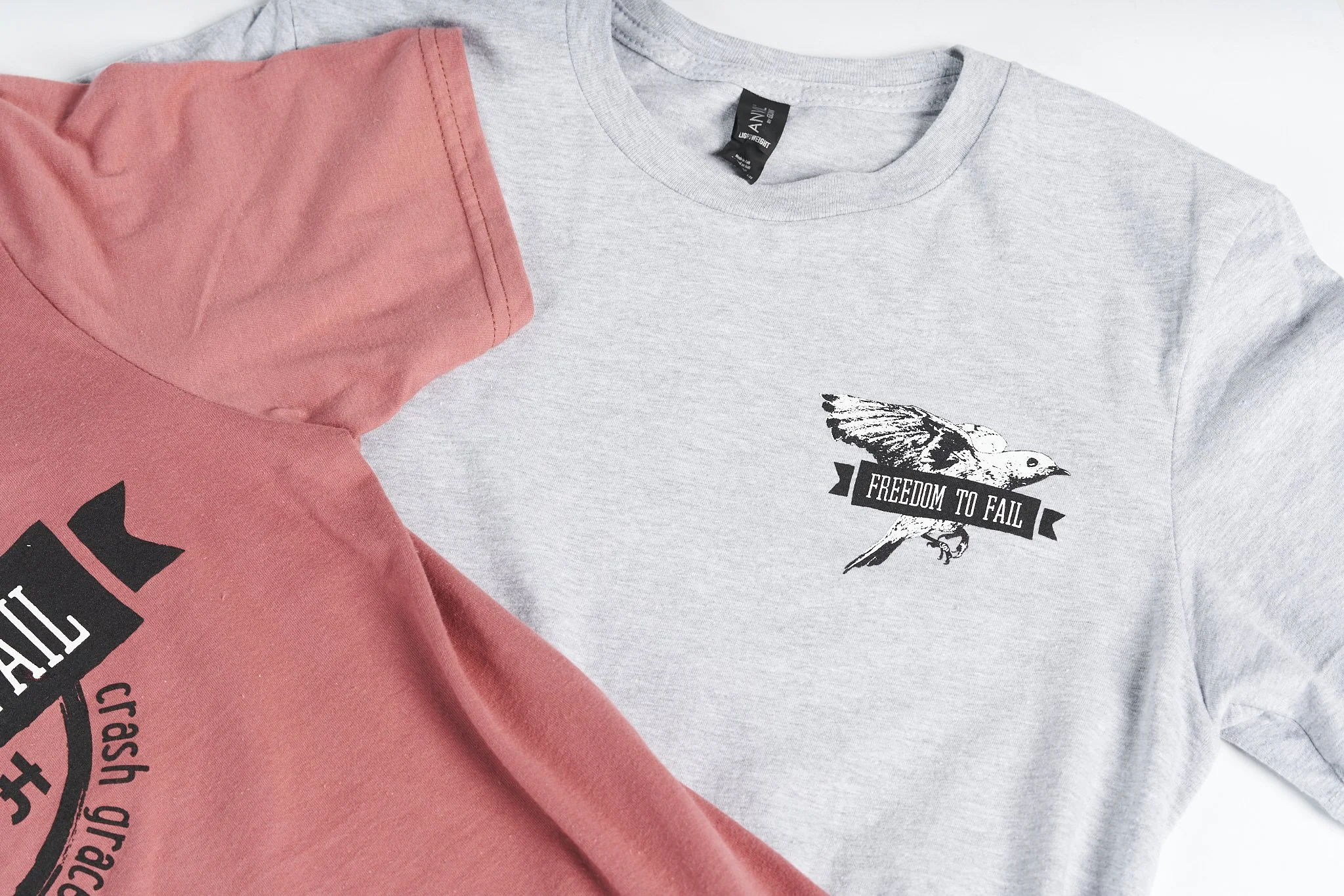
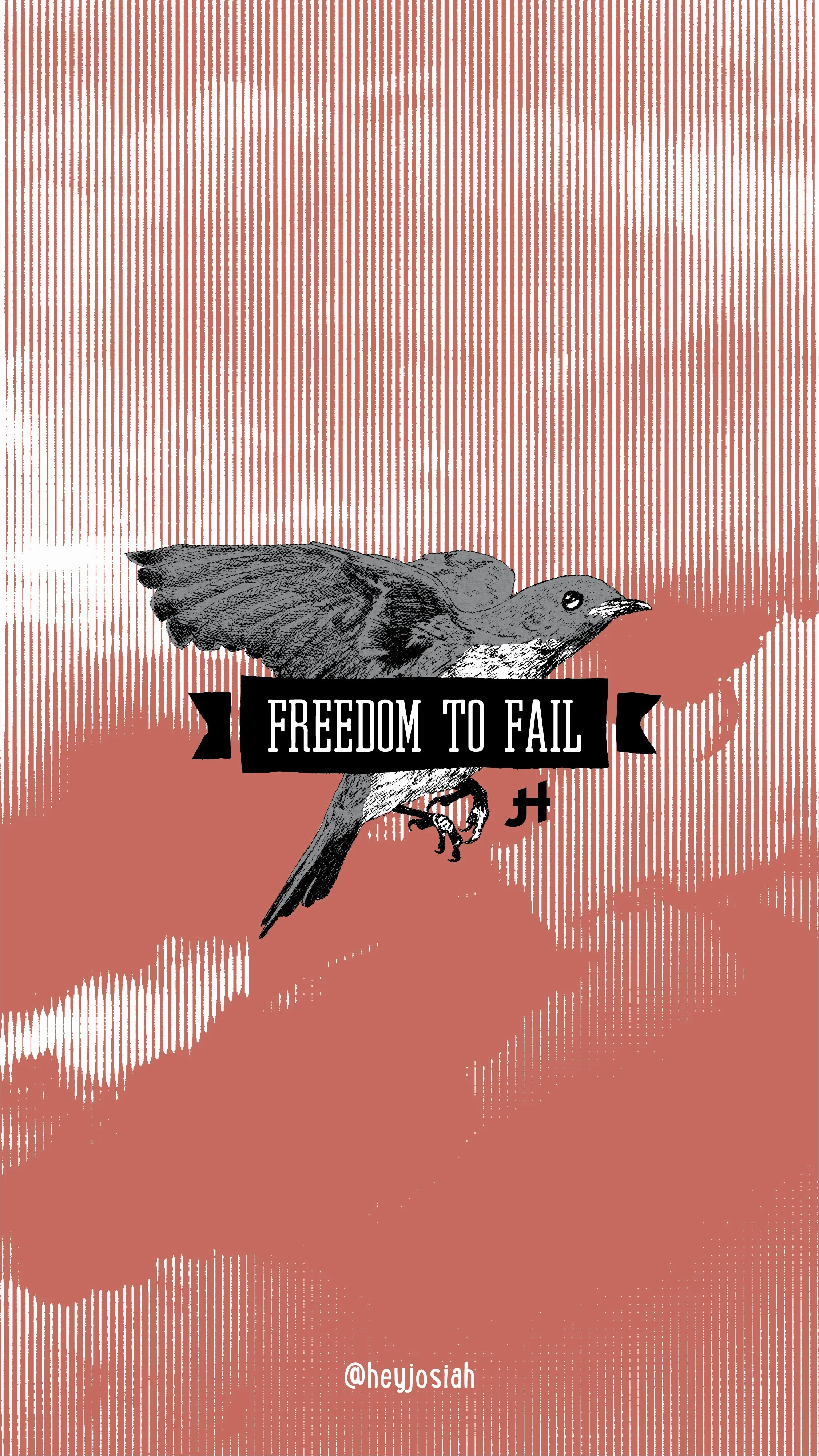
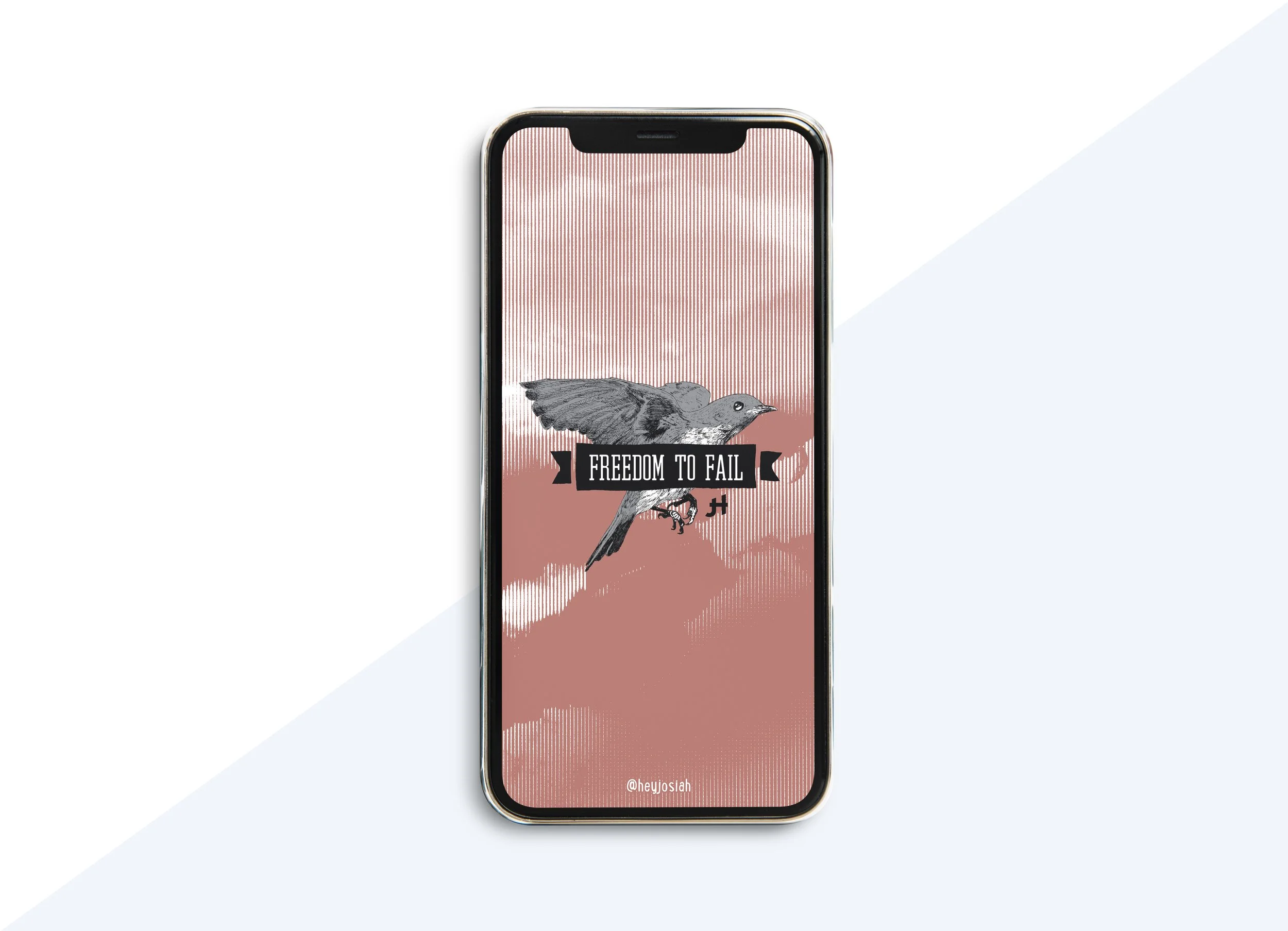
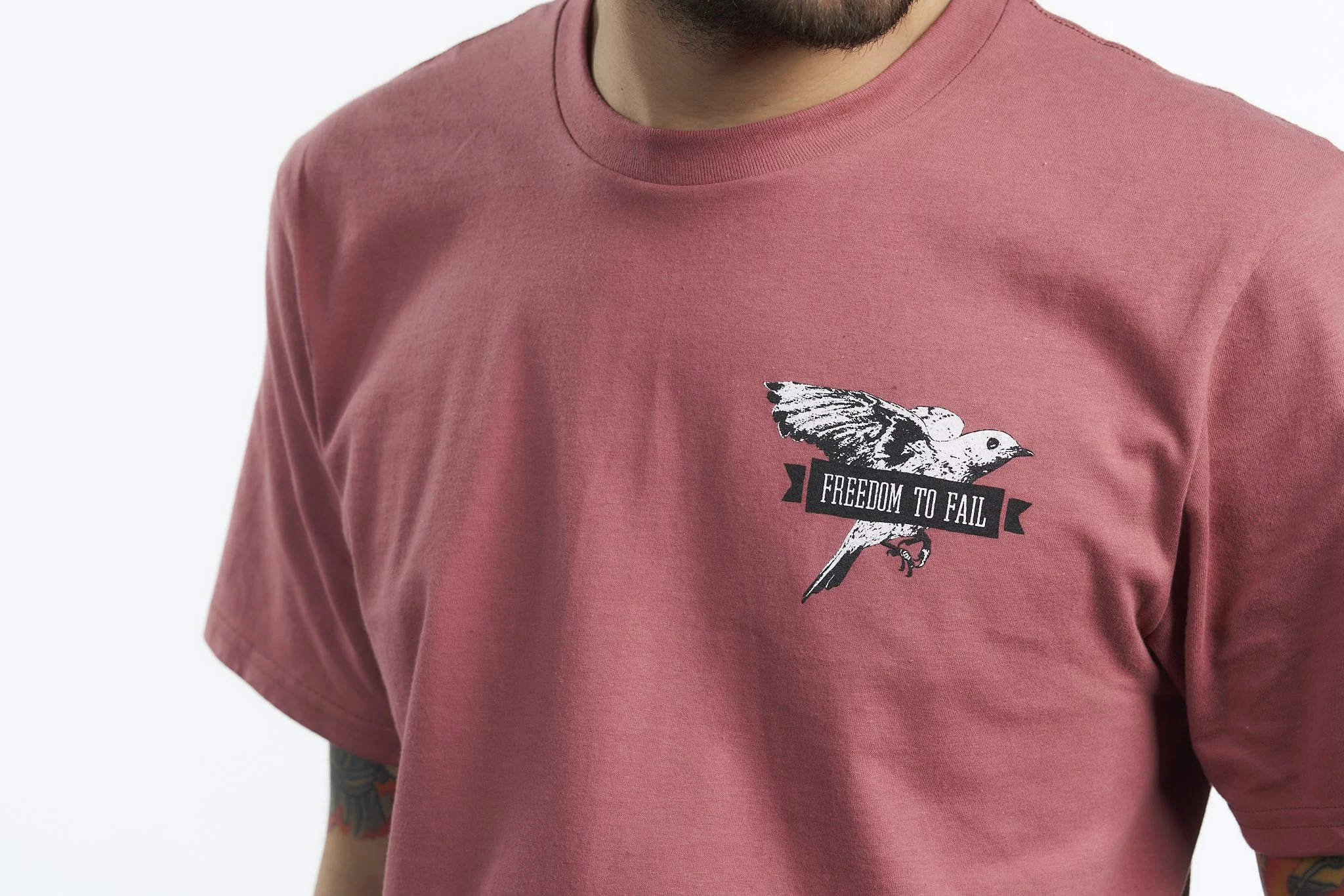
The logomark was designed to carry both weight and openness. A bird in flight, not soaring triumphantly, but moving. Mid-journey. The illustration style leans into texture and detail rather than clean vector perfection, and that was intentional. Too polished felt like performance. This needed to feel earned.
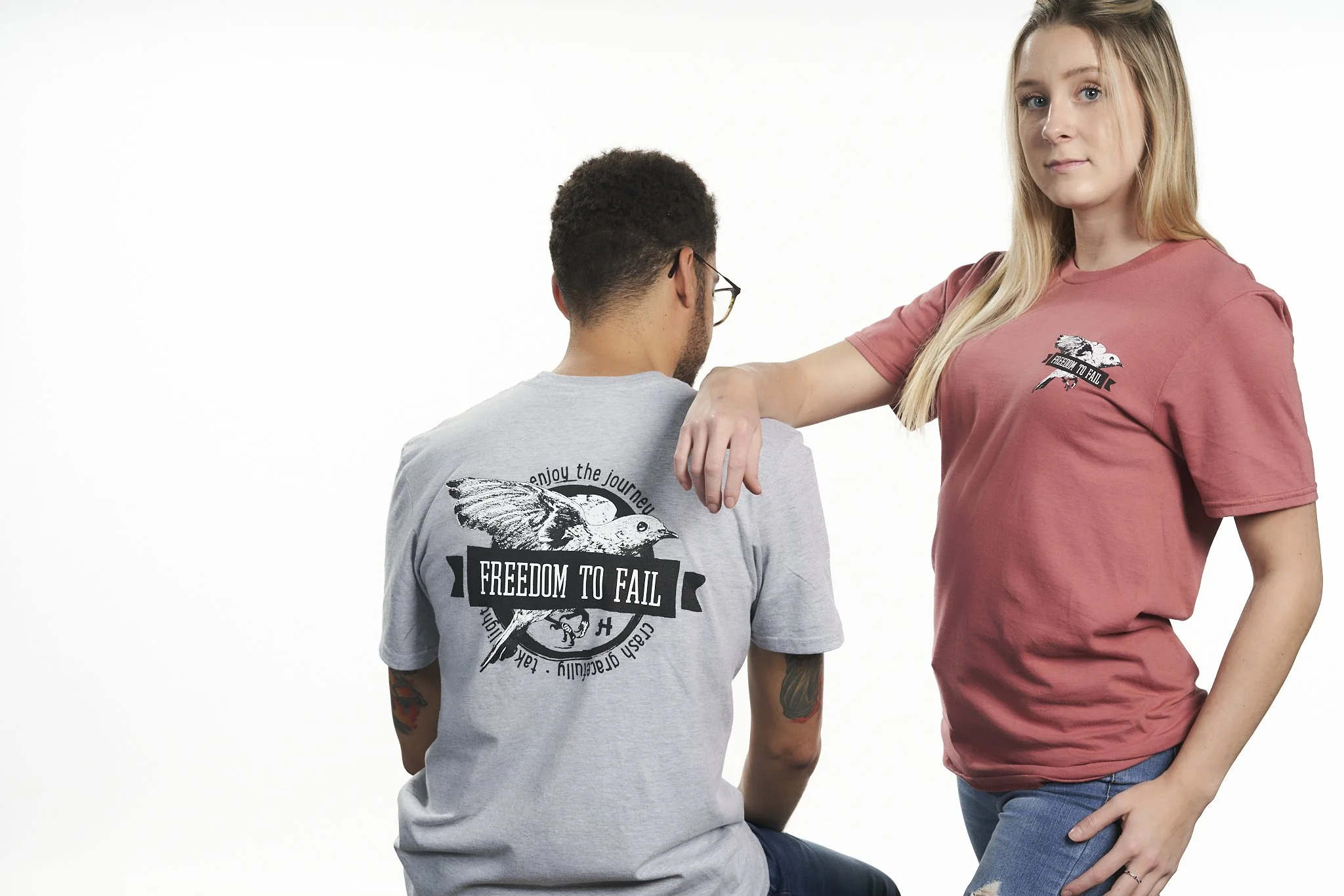
The front chest placement keeps the mark intimate and personal. The back print expands the story. "Enjoy the journey, crash gracefully, take flight." It turns the shirt into something closer to a manifesto than merchandise.
Typography was selected for its balance of warmth and structure, avoiding anything too refined or too raw. The goal was a mark that felt like it had been worked for.